
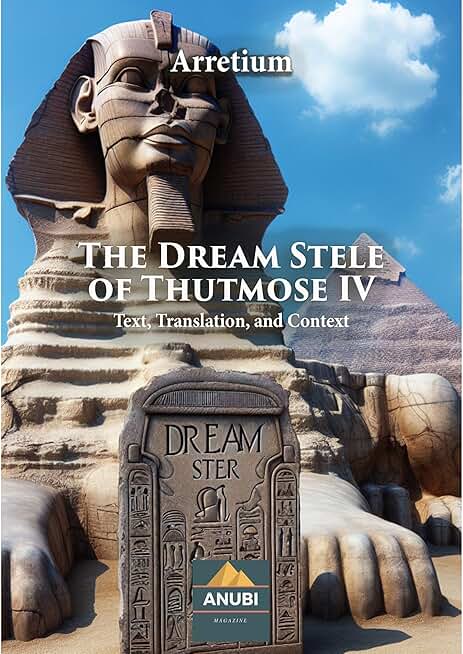

The Dream Stele of Thutmose IV: Text, Translation, and Context
Prashant Trivedi
Description
The Dream Stele, also known as the Sphinx Stele, is a monument erected by order of the pharaoh Thutmose IV (Menkheperura Thutmose) of the 18th Dynasty. This imposing artifact is located in a position of great symbolic importance: between the front paws of the Great Sphinx in the Giza necropolis. The choice of this location is not accidental but serves to physically reinforce the divine narrative inscribed on its surface. The stele itself is a rectangular vertical slab of pink or red granite, of considerable size: approximately 3.6 meters high, 2.18 meters wide, and 0.7 meters thick, with an estimated weight of around 15 tons. Some scholars speculate that it might have originally formed the back wall of a small open-air chapel built right between the Sphinx's paws. Its physical position, therefore, acts in synergy with the text, suggesting that the message comes directly from the deity or is sanctioned by it, and that the king, by placing it there after removing the sand, physically embodies the role of "protector" mentioned in the dream.Read more
Uploader
Prashant Trivedi
Episodes (2)
The Dream Stele of Thutmose IV: Text, Translation, and Context
Bibliography