
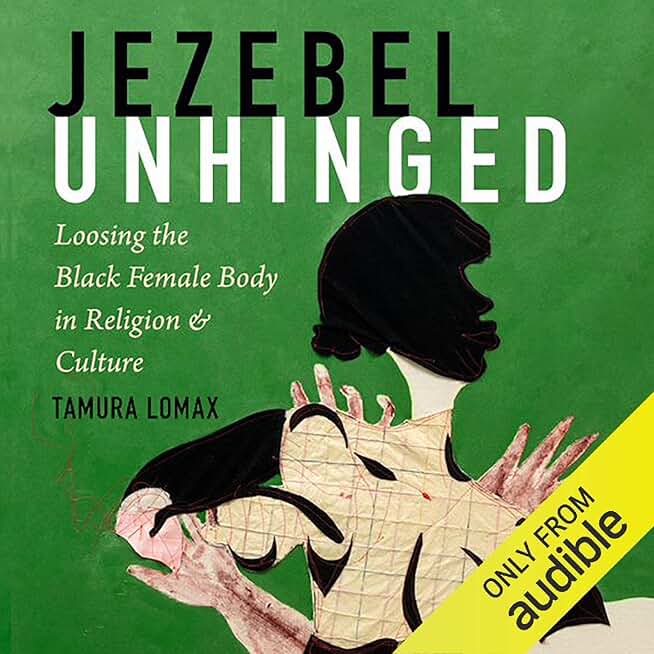

Jezebel Unhinged: Loosing the Black Female Body in Religion and Culture
stacy n. clarke
Description
InJezebel UnhingedTamura Lomax traces the use of the jezebel trope in the Black church and in Black popular culture, showing how it is pivotal to reinforcing men's cultural and institutional power to discipline and define Black girlhood and womanhood. Drawing on writing by medieval thinkers and travelers, Enlightenment theories of race, the commodification of women's bodies under slavery, and the work of Tyler Perry and Bishop T. D. Jakes, Lomax shows how Black women are written into religious and cultural history as sites of sexual deviation. She identifies a contemporary Black church culture where figures such as Jakes use the jezebel stereotype to suggest a divine approval of the “lady” while condemning girls and women seen as "hos". The stereotype preserves gender hierarchy, Black patriarchy, and heteronormativity in Black communities, cultures, and institutions. In response, Black women and girls resist, appropriate, and play with the stereotype's meanings. Healing the Black church, Lomax contends, will require ceaseless refusal of the idea that sin resides in Black women's bodies, thus disentangling Black women and girls from the jezebel narrative's oppressive yoke.Read more
Uploader
faye.world
Related Works

Episodes (8)
Acknowledgments
Chapter 1: Black Venus and Jezebel Sluts: Writing Race, Sex, and Gender in Religion and Culture
Chapter 2: "These Hos Ain't Loyal": White Perversions, Black Possessions
Chapter 3: Theologizing Jezebel: Womanist Cultural Criticism, a Divine Intervention
Chapter 4: "Changing the Letter": Toward a Black Feminist Study of Religion
Chapter 5: The Black Church, the Black Lady, and Jezebel: The Cultural Production of Feminine-ism
Chapter 6: Whose "Woman" Is This?: Reading Bishop T. D. Jakes' Woman, Thou Art Loosed!
Chapter 7: Tyler Perry's New Revival: Black Sexual Politics, Black Popular Religion, and an American Icon