
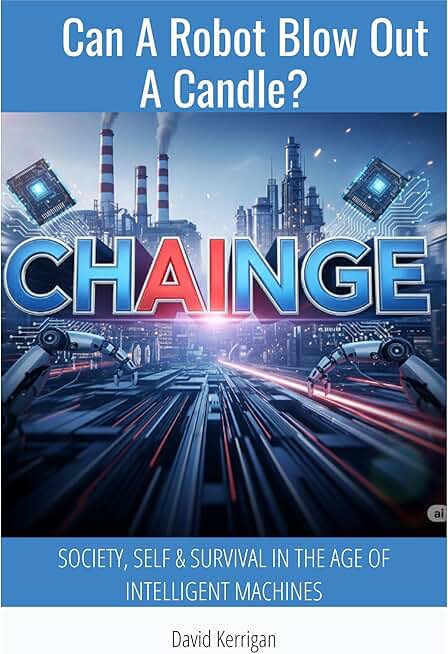

Can a Robot Blow Out a Candle?
Anne_royaljourney
Description
The year is 2035. Your daughter is turning six, and her best friend is a robot. You’re not worried about it eating the cake, but you do wonder: can a robot blow out birthday candles?This simple question opens a door to the most profound societal shift in human history. The revolution isn't coming; it's already here, unfolding quietly in our homes, schools, and social spaces. Driven by the rise of Artificial Intelligence and Robotics, this isn't just another technological upgrade—it's a fundamental challenge to our social structures, our psychological well-being, and our very identity as humans.In this book, we move beyond the headlines to confront the urgent, human-centric issues we are dangerously unprepared to answer:The Human Response:Our brains are psychologically ill-equipped to handle abstract threats like the AI revolution. How do we overcome our innate cognitive biases to make conscious, deliberate choices about the future we want?The New Social Contract:How do we build a new social contract for what lies ahead?Who are the The Architects of Tomorrow:Have we learned anything from the social media era, or are we sleepwalking into a reality shaped by profit motives over human well-being?The AI-Native Generation:The first generation of children is growing up with AI companions as a normal part of life, creating a profound generational divide. What are the developmental and social risks when technology targets the fundamental human need for attachment?This is an essential guide for anyone ready to wake up, reclaim agency, and start building a future that serves humanity.Read more
Uploader
Anne_royaljourney
Related Works

Episodes (10)
Prologue
Chapter 1 - The Quiet Revolution
Chapter 2 - Why Humans Fail to Confront Non-Immediate Existential Threats
Chapter 3 - The Presumptive Architects of Tomorrow
Chapter 4 - Technological Inevitability and Society’s Response
Chapter 5 - The Cobot[66] Generation: Kids & Technology
Chapter 6 - Robots, Adults & Society
Chapter 7 - A Framework for a Human-AI Future
Chapter 8 - Conclusion: Choosing Our ChAInge
End Credits