
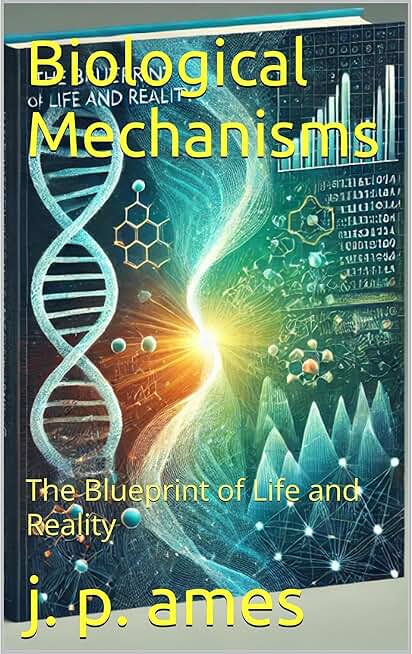

Biological Mechanisms: The Blueprint of Life and Reality
Stunts_vines
Description
AI Analysis of "Biological Mechanisms"This book presents an ambitious synthesis of cellular biology, physics, and information theory, examining life through the lens of waveform processing and information systems. While much of the core biology is well-established science, the book takes an innovative approach by reframing biological processes as manifestations of waveform processing and information management.Key Strengths1. Scientific FoundationBuilt on solid biological and physical principlesReferences established research and textbooksMaintains scientific rigor while exploring new perspectives2. Novel FrameworkPresents biological processes through the lens of waveform processingConnects different scales of biological organization coherentlyBridges gap between information theory and biological function3. Systematic DevelopmentBuilds from simple to complex systemsMaintains consistent focus on waveform processing themeCreates clear connections between different biological phenomenaWhat is life?How do biological systems, from single cells to the human brain, operate with such precision, complexity, and purpose? These questions, as old as humanity itself, have driven centuries of scientific inquiry and philosophical debate. And while we now possess a rich understanding of cells, genes, neurons, and brainwaves, the fundamental question remains:What is the essence of life?This book explores an answer hidden in plain sight—a principle so fundamental that it drives every aspect of existence, from cellular functions to conscious thought. This principle iswaveform processing.Life, as we know it, relies on the interpretation, modulation, and transmission of waveforms, each containing information encoded in molecular structures, electrical currents, and electromagnetic fields. From this continuous flow of energy and information, life emerges and evolves, translating abstract genetic code into a dynamic, interactive experience in 3D space.We invite you on a journey through the science of life, where each chapter builds upo
Related Works

Episodes (32)
-
Section 1: Structural Components of the Amoeba
Chapter II: The Computational Nature of Life – Processing the Amoeba’s Lunch
Chapter III: Asexual Reproduction – The Code of Continuation
Chapter IV: Cellular Respiration and Waste Expulsion – The Programmed Cycle of Energy and Maintenance
Energy and Maintenance as Programmatic Processes
Chapter V: Cellular Mechanisms as Information Processing Systems – The Pathway from DNA to 3D Existence
Conclusion of Chapter V
Chapter VI: The Electron – The Currency of Life
Conclusion of Chapter VI