
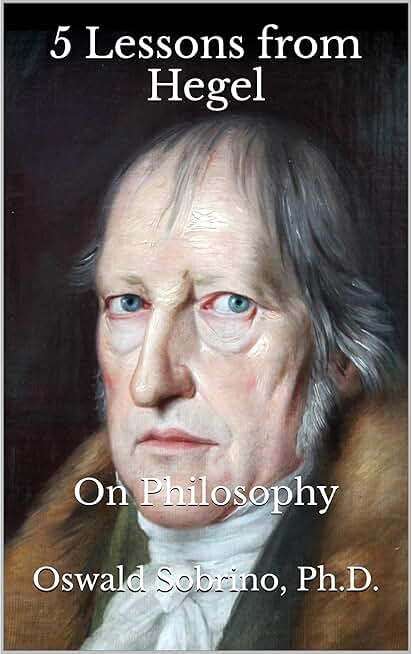

5 Lessons from Hegel: On Philosophy
Abibatou Macalou
Description
This book considers one of the most important philosophers: G. W. F. Hegel (1770-1831). With the aid of Hegel scholarship, we are able to gain a fair appreciation of his important role in the history of Western philosophy. This book focuses on Hegel's Introduction toThe Lectures on the History of Philosophy,in which Hegel provides his view of the history of philosophy as the unfolding of Spirit's self-understanding as conscious thought or reason. Spirit is for Hegel the Absolute, being, what is ultimately real; Spirit is a version of God. Spirit is also reason. Hegel sees the self-understanding of Spirit most powerfully present in the history of philosophy since philosophy is pure thinking. As we make our way through the Introduction to Hegel'sLectures on the History of Philosophy, we begin to grasp the revolutionary nature of Hegel's contribution to philosophy: a philosophy of movement and dynamic development devoted to the idea that reason is the ultimate reality. For Hegel, the entire panorama of different philosophies over time incarnates this development toward truth. What is most impressive about Hegel is his intellectual daring as one who passionately immersed himself in the great philosophers to propose a grand vision of how their various philosophies, together, reach the goal of truth. It is undeniable that Hegel's greatest, unintended impact was his influence on the thinking of Karl Marx. That historical impact alone is reason enough to gain a certain familiarity with Hegel.Read more
Uploader
Abibatou Macalou
Related Works

Episodes (7)
Introduction
Chapter 1 Categories for the History of Philosophy
Chapter 2 Applying the Categories
Chapter 3 Consequences for the History of Philosophy
Chapter 4 Relation to Science and Religion
Chapter 5 Stages in the History of Philosophy
Conclusion